


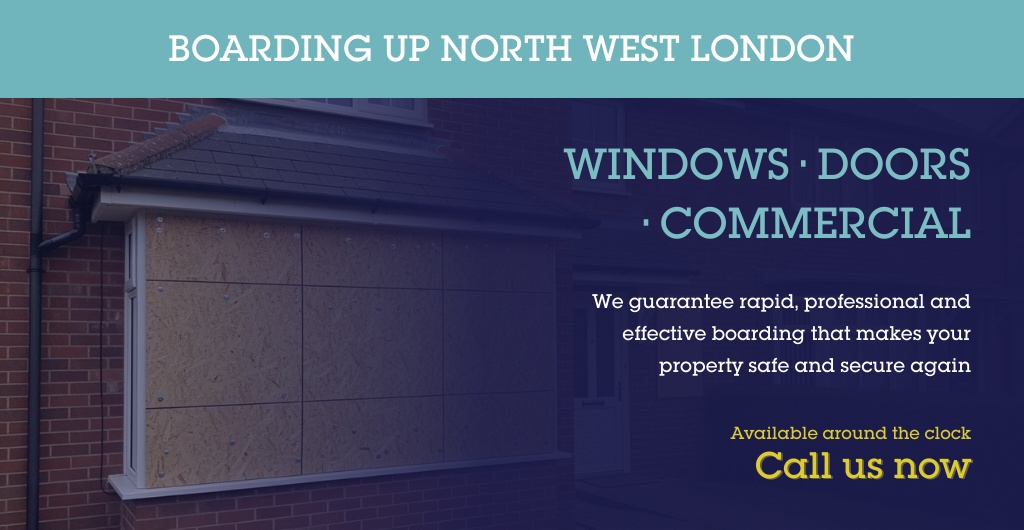
Boarding Up for Vacant Property in North West London (NW1–NW26)
Leaving a property empty can be stressful — whether it’s between tenants, awaiting probate, mid-renovation, or simply not in use. Vacant buildings in North West London often attract unwanted attention quickly, especially where there’s footfall near stations, high streets, and busy arterial roads.
Our vacant property boarding-up service is designed to keep buildings secure and weather-tight for as long as needed, across the NW postcode area (NW1–NW26). We’ll help you reduce the risk of trespass, theft, fly-tipping and further damage, and we’ll leave you with clear documentation for your records or insurer.
Need to secure a vacant property now? Call 020 4634 7794 or email us.
Vacant properties in NW London: what typically goes wrong
Empty buildings are more vulnerable because there’s no daily activity — and small signs of neglect (a broken pane, a loose door, an open fanlight) can escalate into a serious security incident.
Common callouts for vacant property boarding in North West London include:
- Forced entry through back doors, side alleys, or communal entrances (often targeting rear elevations)
- Smashed ground-floor windows and glazing panels, especially on visible frontages
- Squatters or trespass gaining access through a previously damaged opening
- Theft of fixtures (copper pipework, boilers, cabling, tools left by contractors)
- Weather damage after a storm exposes a window, rooflight or temporary opening
- Fire damage where the building is left insecure after the fire brigade has finished
- Repeated vandalism when an earlier “quick fix” can be removed from outside
If you’re dealing with an incident right now, go straight to our emergency boarding up page and call us — we’ll talk you through the next steps calmly and clearly.
Typical vacant-property scenarios we’re asked to secure
Vacant properties aren’t all the same. The right approach depends on how long it will be empty, the location, and the condition of the openings.
Between tenancies (landlords and letting agents)
A common situation in areas with lots of rental stock — for example conversions and mansion blocks around South Hampstead, West Hampstead, Kilburn and Swiss Cottage. If a tenant has moved out and there’s damage to a door or window, it’s sensible to secure it properly while you organise repairs and re-letting.
Probate and inherited homes
We regularly help families and executors who need the property secured while they arrange valuations, clearance, or sale. Often the priority is non-destructive securing where possible, plus good documentation.
Renovations and construction works
During refurbishments, it’s common for openings to be temporarily exposed — removed windows, stripped doors, stolen materials, or contractor access issues. Boarding can be installed in a way that still allows managed access for trades.
Void commercial units
Empty shops and small offices around busy routes and parades are at higher risk of repeated attacks. If your unit is awaiting a new tenant, shopfront boarding and/or steel security screens can be a better medium-term solution than repeated plywood replacements.
See our dedicated commercial property boarding up page if you’re responsible for retail or office premises.
How we secure vacant properties (and why method matters)
Vacant-property boarding isn’t just “putting a board over it”. The fixing method, material choice, and how we treat the frame all affect security, weather protection, and how straightforward it is to remove later for glazing repairs.
Step 1: Risk check and access plan
We start by identifying:
- Points of entry (front, rear, side access, alleyways, low roofs, communal areas)
- Condition of frames (sound timber, rotten sash boxes, cracked uPVC, damaged brickwork)
- Whether the property must remain accessible (keys with agent, contractors on site, managed entry)
If the frame is too damaged for non-destructive fixings, we’ll explain the options before proceeding.
Step 2: Material selection (plywood vs OSB)
For most vacant-property jobs we use:
- 18mm exterior-grade plywood for stronger security and better durability in wet conditions
- 12mm OSB for smaller openings or short-term internal protection (where appropriate)
We’ll recommend the right board based on exposure, height, and how long it needs to last.
Step 3: Anti-tamper fixing from the inside where possible
Where access allows, we aim for fixing methods that can’t be removed from outside — especially important if the building will be unattended. This reduces the risk of the board simply being unscrewed.
On larger or more vulnerable elevations, we may use:
- Battening and through-fixing to spread load and reduce frame damage
- Anti-tamper fixings to deter opportunistic removal
- Neat, close-fitting cuts to minimise pry points
Step 4: Secure doors properly (not just the lock area)
If a door has been forced, the weak point is often the frame and keep, not just the slab. Depending on the condition and risk level, we may recommend either:
- door boarding in North West London (when the existing door is compromised or missing), or
- a temporary steel door solution for medium-term vacant properties that need robust access control and repeated entry without ripping off boards.
Step 5: Deal with shopfronts, rooflights and odd openings
Vacant properties often have “non-standard” vulnerable spots:
- rear French doors
- basement windows by the pavement
- fanlights above doors
- rooflights and skylights on flat roofs
We cover these with the correct method for the opening and height. For overhead vulnerabilities, see roof boarding in North West London.
Vacant property security options: which solution fits your building?
Different empty buildings need different levels of security. Here’s how we usually guide customers.
Short-term vacancy (days to a couple of weeks)
- Ideal when you’re awaiting glazing replacement, a locksmith, or a handover.
- Typically uses plywood/OSB with appropriate fixings.
This often overlaps with window boarding in North West London after a break-in or accidental damage.
Medium-term vacancy (weeks to months)
- Better fixings, stronger materials, more attention to repeat-attack prevention.
- Temporary steel doors can be worth it if you need regular access for inspections or works.
Longer-term voids (months+)
- Consider more robust, purpose-designed solutions (e.g., steel security screens) where repeated attacks are likely.
- Planned security, clear access control, and good record-keeping become more important.
If you manage multiple sites, we can also help you standardise the approach across NW London so inspections and re-securing are consistent.
Situations that lead to vacant-property boarding up (and what to do next)
Vacant properties are often secured after an incident. These are the most common:
- Burglary / forced entry: Keep a police reference number, and take photos if it’s safe. We can help you secure openings so you can pause the situation and plan repairs. See boarding up after a burglary.
- Vandalism: Glass is often smashed repeatedly once a unit looks empty. Boarding reduces visibility and access. See vandalism repairs and boarding.
- Storm damage: If wind takes out a pane or dislodges a panel, we’ll prioritise weatherproofing and safety. See storm damage boarding.
- Fire damage: We’re not a fire restoration company, but we can secure the building after the fire service has finished. See fire damage securing.
- Flood damage: Swollen frames and distorted doors can make securing tricky; ventilation can matter too. See flood damage boarding.
- Accidental impact: Vehicle strikes and site accidents often leave irregular openings that need safe boarding. See accident damage boarding.
What you get from us (useful for landlords, agents, insurers and managers)
We try to make the admin side easier, especially when you’re coordinating multiple parties.
Typically, you’ll receive:
- A clear description of what was secured, and how
- Time-stamped photos of the boarded areas (before/after where possible)
- An itemised invoice and work statement for your records
- Practical notes if we spot related vulnerabilities (e.g., a rear window left unlatched, a loose gate, damaged frame)
If you’re making a claim, our insurance claims guidance explains what insurers usually ask for. We’re not loss adjusters or legal advisors, but we can provide the documentation that’s commonly needed.
Vacant property boarding across North West London (NW1–NW26)
We cover the full NW postcode area, including dense inner-London streets, mixed-use high roads, and quieter residential suburbs. Vacant properties exist in every part of NW London — from empty flats above shops to probate houses and redevelopment sites.
You can explore local coverage via our areas we cover page. Popular pages include:
- boarding up in Camden Town
- boarding up in Cricklewood
- boarding up in Hampstead
- boarding up in Hendon
- boarding up in Park Royal
- boarding up in Golders Green
If you don’t see your exact neighbourhood listed, you can still contact us — we work across NW1–NW26.
What to expect when you call
- Tell us what’s happened (vacant property, break-in, storm damage, planned security, etc.).
- We’ll ask a few practical questions: address/postcode, type of openings, height/access, whether police/fire brigade are involved, and whether anyone can provide access.
- We’ll explain options: plywood/OSB boarding, door solutions, rooflight boarding, and what’s realistic based on the condition of frames.
- Work is completed and documented, with photos and an invoice sent through.
We don’t promise fixed arrival times — traffic, access, and job complexity vary — but urgent vacant-property risks are prioritised wherever possible.
FAQs: Vacant property boarding up in North West London
How do I secure a vacant property after a break-in?
If it’s safe, take a few photos, keep the police reference number, and avoid touching anything if forensics may attend. Then call us for securing. We’ll board vulnerable windows/doors and can advise if a temporary steel door is more appropriate for a repeated-risk location.
For incident guidance, see boarding up after a burglary.
Is boarding up covered by insurance for empty properties?
Sometimes, but it depends on your policy and whether the property is classed as “unoccupied” for a set number of days. Insurers often require evidence of forced entry/damage and proof of the securing works. Our insurance claims guidance explains what to keep and what documentation we can supply.
Can you secure a vacant flat in a mansion block with communal access?
Yes — but we’ll need a clear access plan (concierge, managing agent, keyholder). In areas like St John’s Wood, South Hampstead and Belsize Park, access and parking can be the main challenge, so it helps if you can confirm entry arrangements when you call.
What’s better for a long-term void unit: boarding or steel screens?
Boarding is often right for short-term or one-off incidents. If a unit is likely to be targeted repeatedly or will remain empty for months, steel security screens can be more robust and cost-effective over time. We’ll talk through the pros/cons based on the frontage and risk.
Will boarding damage my frames?
We aim to use non-destructive methods where possible, especially on timber sash frames and older properties. If the frame is already split/rotten or too weak to hold fixings safely, we’ll explain the options before proceeding.
Ready to secure a vacant property in NW London?
Whether you’re a landlord, executor, facilities manager or letting agent, we’ll help you make the property safe, secure and easier to manage while it’s empty.
Ready to get started? Call 020 4634 7794 or email us for a free, no-obligation quote.
