

Situations We Help With (Boarding Up North West London)
When something goes wrong at your property, it rarely happens at a convenient time. A smashed window, a forced door, or storm damage can leave you exposed to further theft, weather, and liability—especially if the building has to be left unattended.
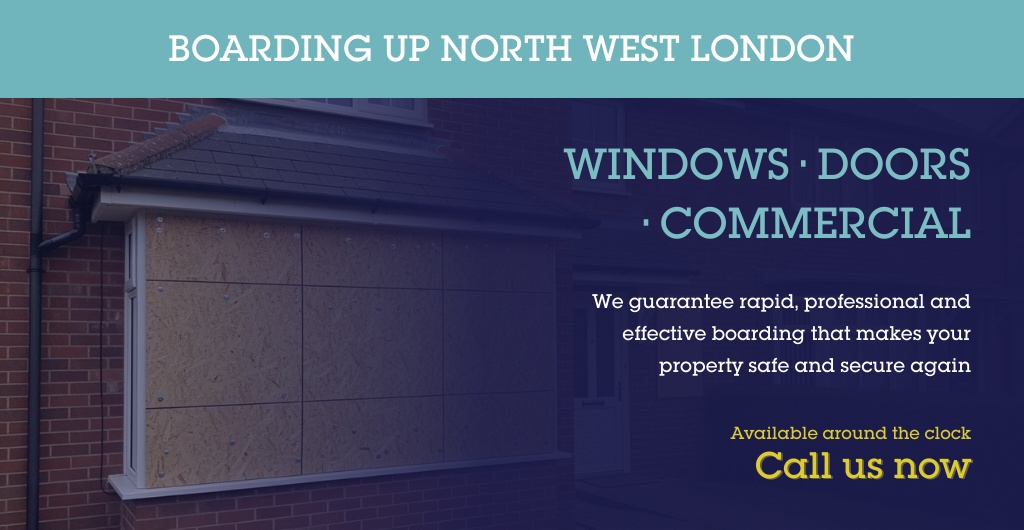
We provide boarding up North West London across the NW postcode area, helping homeowners, landlords, shop managers and facilities teams secure damaged openings and stabilise the site so you can take the next steps. If you need urgent help, use our emergency service; if you’re planning ahead (void periods, renovations, risk sites), we can advise on longer-term temporary security too.
If you’re not sure which situation applies, call us and explain what’s happened—photos on your phone can help. We’ll talk you through practical options and what’s realistic on the first visit.
Need urgent help? Call 020 4634 7794 or email [email protected].
When you should consider boarding up (and why it matters)
Boarding up is usually the first “make safe” step after damage. It’s not about cosmetic repairs; it’s about:
- Preventing opportunistic entry after a break-in or vandalism
- Keeping out wind and rain after storm damage or a roof opening
- Reducing risk to the public from loose glass or unsafe doorways
- Meeting insurer and landlord requirements to secure the building promptly
- Buying time while glazing, doors, or building repairs are arranged
For an overview of what boarding up involves (materials, fixings and typical outcomes), see: what boarding up is and how it works.
If the situation is urgent or out of hours, go straight to: emergency boarding up.
The situations we cover in North West London (NW1–NW26)
Below are the most common events that trigger emergency or same-day boarding up in NW London. Each page explains what to do next and how we typically secure properties in that scenario.
- Boarding up after a burglary or break-in
- Boarding up after vandalism damage
- Boarding up after storm damage
- Boarding up after fire damage (post-fire security)
- Boarding up after flood damage
- Boarding up after an accident or impact (vehicle strikes, falls, breakages)
What to do immediately (before we arrive)
If you’ve just discovered damage, it’s normal to feel pressured to “fix it now”. A few sensible actions can make the whole process smoother—without putting you at risk.
-
Check safety first
- Don’t step on broken glass or approach unstable frames.
- If there’s structural concern (e.g., a shopfront hit by a vehicle), keep people back and call emergency services if needed.
-
If it’s a crime, report it
- If you’re dealing with a break-in, call the police and keep your crime reference number. Insurers often request it.
-
Take photos (only if safe)
- Wide shots showing the whole opening and close-ups of the damage help with assessment and insurance evidence.
-
Avoid quick DIY fixes that create new problems
- Tape and cardboard often fail in wind/rain.
- Screwing boards straight into fragile frames can make later repairs harder.
-
Call for professional boarding up
- If you need urgent attendance, use: 24 hour emergency boarding up in North West London.
How we typically secure properties after damage
Every job is different, but most situations follow a similar “make safe” workflow. We focus on security and weather protection first, then leave you with clear documentation for your next contractor or insurer.
1) We assess the opening and the fixing method
We look at the type of opening (window, door, shopfront, rooflight), what’s left of the frame, and whether we can fix the board non-destructively (e.g., using internal battens) or whether the frame is too compromised.
If the frame is too damaged for a tidy fix, we’ll explain options before proceeding—sometimes the priority is simply to prevent entry and water ingress until the frame is rebuilt.
2) We choose the right materials for the risk
Depending on the size and exposure, we may use:
- Exterior-grade plywood (often 18mm for higher-risk openings)
- OSB (commonly 12mm for smaller, lower-risk openings)
- Anti-tamper fixings where the property may be unattended or at repeat-risk
For longer-term security—especially after repeated break-ins, or for empty buildings—we may recommend a temporary steel door or robust screening (where appropriate). You can also explore property-specific options here: vacant property boarding.
3) We fit, secure, and check for gaps or hazards
We’ll remove obvious loose shards if safe to do so, set boards flush, and secure the perimeter to reduce leverage points. For shopfronts and larger spans, we plan fixings to avoid bowing and to resist tampering.
4) We provide clear job documentation
Customers commonly need paperwork quickly. We can provide:
- Time-stamped photos of the secured opening(s)
- An itemised invoice
- A brief work statement describing what was done and where
This is often helpful if you’re speaking to an insurer—see: insurance claims support.
Common scenarios (and what we do)
Break-ins and attempted forced entry
A kicked-in door in a mansion block or a prised rear uPVC door on a ground-floor flat needs securing fast. If the lock has failed or the door won’t close, we can board and advise on next steps. For medium-term stability, a temporary steel door can be appropriate where the doorway is compromised.
More detail: burglary repairs and boarding up.
Vandalism and smashed glazing
From shattered panes to repeated stone damage, boarding up stops the cycle of “repair, re-break, repeat”. We’ll aim for secure fixings that can’t be undone from outside, especially on street-facing windows and shopfronts.
More detail: vandalism repair and boarding up.
Storm damage (including wind-driven rain)
North West London gets plenty of gusty nights where a weak sash window gives up, or debris takes out a pane. The priority here is weatherproofing and preventing further internal damage.
More detail: storm damage boarding up.
Fire damage (post-fire securing)
After the fire service has finished, properties are often left with compromised doors, broken windows, or missing sections where access was needed. We’re not fire restoration specialists, but we can secure the building to reduce theft and weather exposure.
More detail: fire damage boarding up.
Flood damage and swollen frames
Flood water can swell timber, distort uPVC, and stop doors/windows closing properly. Boarding up can be a practical way to secure an opening while drying and repairs are arranged—sometimes with ventilation considerations depending on the damage.
More detail: flood damage boarding up.
Accidents and impact damage
Vehicle impacts to boundary walls or shopfronts, accidental breakage, or falling masonry can create unpredictable hazards. We can board up and make safe, but if there’s structural instability you may also need a builder or structural engineer—securing comes first, full repair follows.
More detail: accident damage boarding up.
The services we use to solve these situations
Situations are the “what happened”; services are the “how we secure it”. Depending on the damage, we may use one or more of the following:
- window boarding in North West London for cracked, broken or missing panes
- door boarding in North West London for forced doors and unsafe entrances
- shopfront boarding in North West London for commercial glazing and larger openings
- roof boarding in North West London for skylights, rooflights and overhead openings
- temporary fencing when a perimeter needs controlling after an impact or site damage
If you want help choosing the right approach for your type of property, start here:
What we need from you (to speed things up)
When you call, a few details help us plan the right materials and fixings:
- The postcode (NW1–NW26) and whether it’s street-facing or rear access
- What’s damaged: window/door/shopfront/rooflight
- Approximate size and height (ground floor, first floor, above a porch, etc.)
- Whether the property is occupied, vacant, or a managed site
- Any immediate risks: loose glass, exposed electrics, or signs of forced entry
If you can, send clear photos after the call. If it’s not safe, don’t attempt it—tell us what you can see.
FAQs about boarding up after an incident
Do you cover all of North West London?
Yes—our focus is the NW postcode area (NW1–NW26). If you’re unsure whether you’re in our patch, check the areas we cover or call and we’ll confirm.
Is boarding up covered by insurance?
It often can be, depending on your policy and the cause (burglary, storm damage, accidental impact, etc.). We’re not loss adjusters, but we provide the documentation insurers typically request. See insurance claims support for practical guidance.
How long will the boards stay up?
It depends on the situation and the location risk. Some customers keep boards up for a short period while glazing is arranged; others need longer-term security for voids. If you expect a longer wait, tell us so we can recommend the most suitable method for durability and tamper resistance.
Will you repair the window or door as well?
Our primary role is securing and making safe. In many cases, customers arrange glazing/repairs separately (especially where insurers or managing agents appoint contractors). We can leave clear photos and a work statement to support the next stage.
Do you guarantee an arrival time?
We don’t quote fixed arrival times because traffic, access and the complexity of earlier jobs can change the schedule. If your job is urgent, we prioritise it and keep communication clear—use emergency boarding up when you need help out of hours or the same day.
Ready to secure your property?
If you’ve had a break-in, vandalism, storm damage, fire, flood, or an accident, the next step is to secure the opening so you can regroup and plan repairs.
Need help now? Call 020 4634 7794 for immediate assistance.
Or email [email protected].
